

VOICE MODELS
Voice AI
Local STT, TTS, VAD, and echo control that let devices hear and speak without the cloud.
On-device voice AI to make your hardware listen, reason, and speak.
§02 — Runs on the hardware you ship
Mic → network → datacenter → back.
Every utterance leaves the building. One dropped packet, one silent failure.
Mic → speaker, all on the same chip.
Nothing leaves the chip. Speech, reasoning, memory, tools, and response stay on-device.
Local STT, TTS, VAD, and echo control that let devices hear and speak without the cloud.
C++ runtime to create autonomous agents that reason, plan, and execute multi-step workflows.
Edge-ready SLMs selected, quantized, and compiled for local reasoning on embedded hardware.
The full agentic stack, not a single tool — orchestration, voice, and models in one runtime.
Hardware-agnostic by design. Build once, deploy across NVIDIA, Qualcomm, Apple, and AMD.
Not a wrapper. Built from the ground up for real-time, on-device execution.


Friday runs on your hardware — voice accessible, reads the machine’s own logs, faults, and config. Walk up, scan the code on the enclosure, and it tells you what happened: In words. Before the vendor picks up.
Operator
Scan the code on the machine.
Friday
Pair once, then use voice from anywhere on the same local network.
One optimized binary. Runs on Jetson Orin, Raspberry Pi, or whatever is already in the cabinet.
Stand in front of the unit, scan the pairing code, and you’re in. Nothing to provision, nothing to revoke when someone leaves.
Local models, local tools, local memory. Works on a floor with no uplink and no cell service — and keeps working when connectivity doesn’t.

Talk to your robots. Spoken commands, understood on-device.
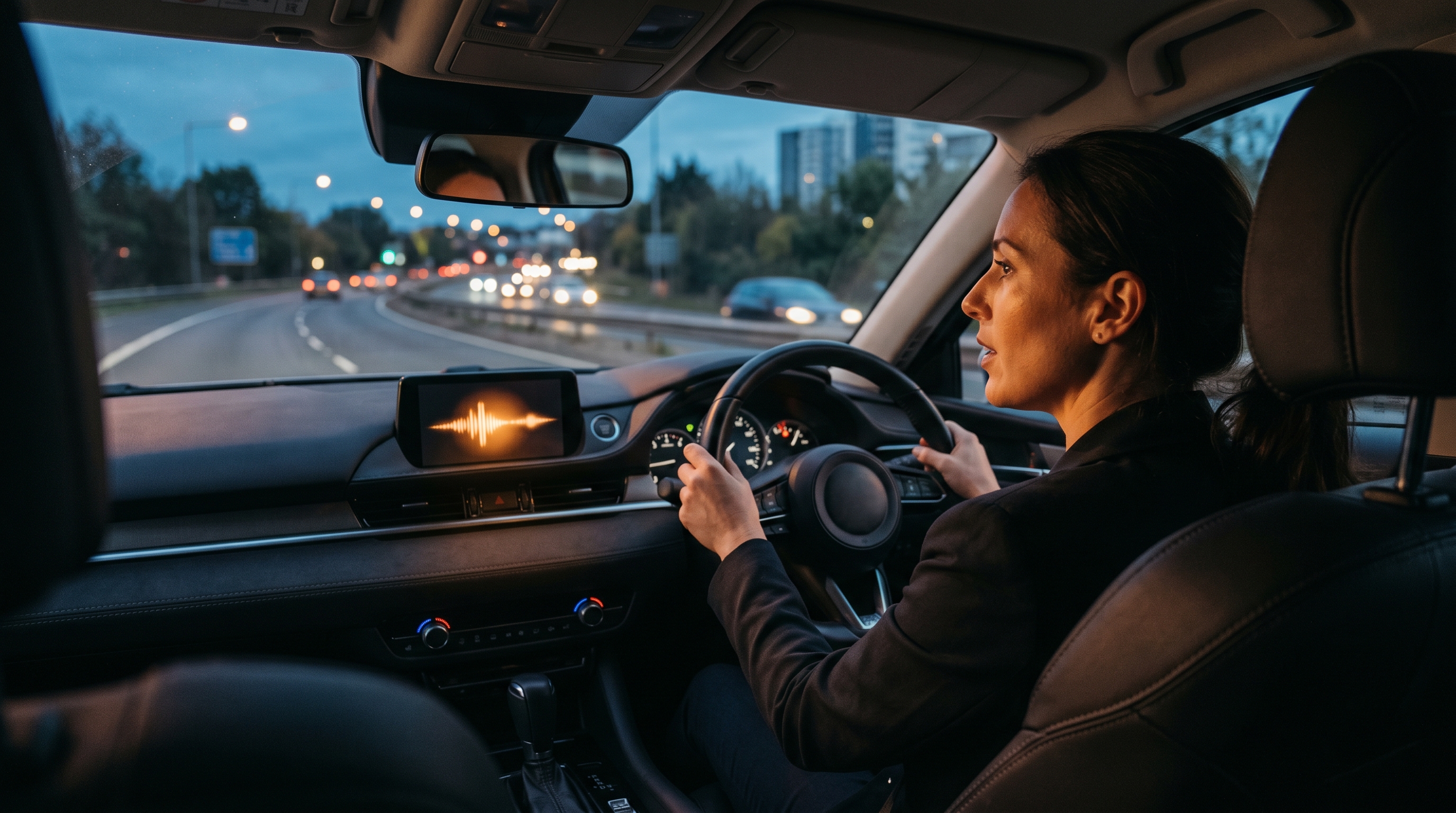
An in-cabin co-pilot that works with no signal.

A mission voice agent where the radio can't reach.

Private voice AI in comms-denied environments.
Your Python voice stack is already C++ underneath — whisper.cpp, llama.cpp, ONNX Runtime. Python is only the orchestration layer, and orchestration is the part with the hard real-time deadline. A look at the GIL, GC pauses, and the process-boundary tax on Jetson.
Read→We shipped an on-device voice agent onto Genie Mobility's autonomous delivery e-bikes in ten days. The engineering worked on the first try. The UX lesson split the stack in a way we hadn't planned, and pushed us into the harder problem underneath: what the contract between a language model and an autonomy stack has to look like before you let one supervise the other.
Read→Matic Cues brings voice and gesture control to the robot vacuum, with the wake word and the entire vision stack running on-device and command understanding going to Google's Gemini API in the cloud. Here's what that architecture says about the real state of on-device voice AI on a Jetson.
Read→Book a 30-minute technical demo. See it run on your hardware.